 Galápagos National Park Endemic Wildlife
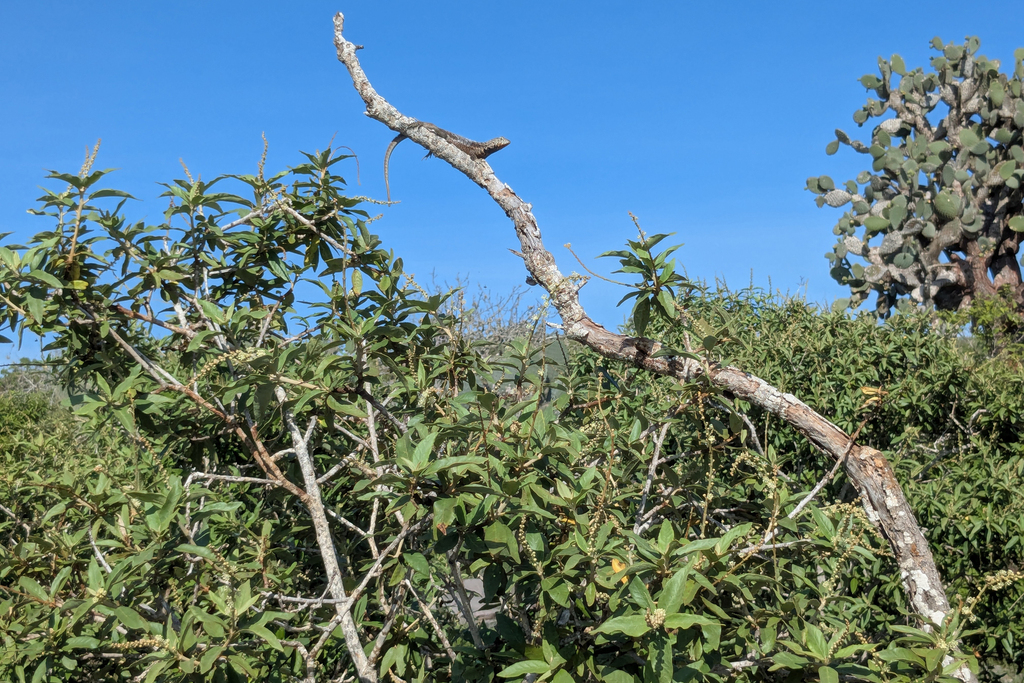
What is this?
Galápagos Lava Lizard Microlophus albemarlensis
Small, agile lizard inhabiting exposed lava and scrub across most islands; they show rapid push-up displays, sexual dimorphism in color, and occupy narrow territorial microhabitats. They are an abundant insectivore and an important prey item for endemic birds and snakes.
Small (10–25 cm total), slender body, often with a dark stripe along the side, males show brighter patches during displays; frequent push-ups and head-bobbing; quick, darting movements across lava.
Common Confusions
- Juvenile Marine Iguana Amblyrhynchus cristatus Juvenile marine iguanas are larger and have a different snout and tail for swimming; lava lizards are slimmer with quick terrestrial movements.
- Juvenile Land Iguana Conolophus subcristatus Juvenile land iguanas are stockier and have different coloration (often more orange) and larger heads; lava lizards remain small and nimble.
- Gecko (introduced) Geckos have toe pads, softer skin and nocturnal habits; lava lizards have clawed toes, rougher scales and are diurnal.
- Small Skink (non-native) Skinks are smooth-scaled, often shinier-bodied and move with serpentine motion; lava lizards show distinct head and limb proportions and push-up displays.
- Anole (not present historically) Anoles have dewlap displays and arboreal toe pads; lava lizards lack these features and are more terrestrial.