 Algonquin Provincial Park Mammals of the Mixed Forest
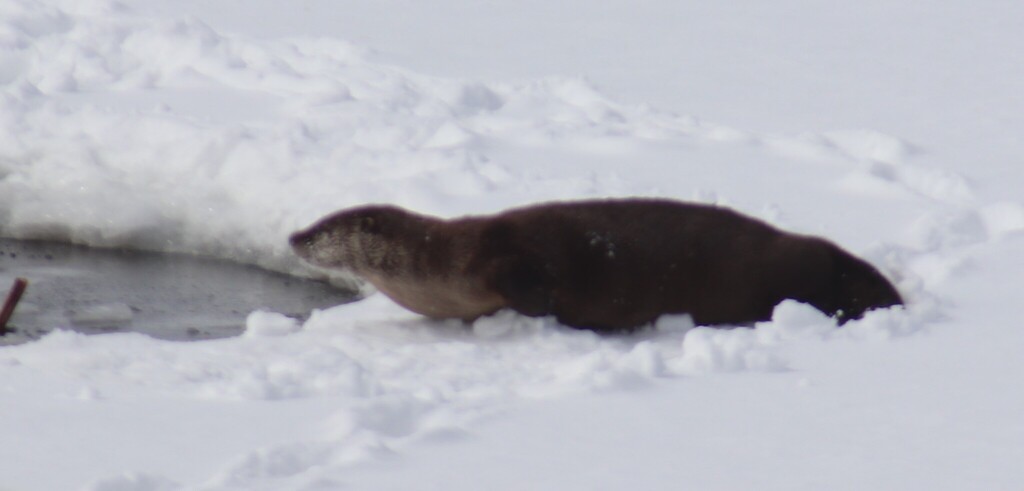
What is this?
North American River Otter Lontra canadensis
River otters are sleek, social carnivores that forage fish and invertebrates in lakes and streams; they use dens in banks or natural cavities and are often playful. Their presence signals healthy aquatic systems in Algonquin.
Look for a long, streamlined body with short legs and a strong, tapered tail; otters slide into water, surface frequently, and often swim with head and back visible. They give chirps and whistles when social or alarmed.
Common Confusions
- Mink Neovison vison Minks are smaller and more weasel-like with a slimmer profile; otters are much larger with thick necks and long, tapered tails.
- Muskrat Ondatra zibethicus Muskrats have a laterally flattened tail and different swimming posture; otters show more fluid undulating swimming and surface dives.
- Beaver Castor canadensis Beavers are bulkier, have a paddle tail and build lodges; otters are lean with rounder heads and playful group behavior.
- Seal Seals are marine and not found in Algonquin; confusion only possible for very distant silhouettes in large lakes.
- Otter Pup Lontra canadensis Pups are smaller and may remain at den sites; adults are longer and more streamlined when swimming.