 Teide National Park Volcanic Plants
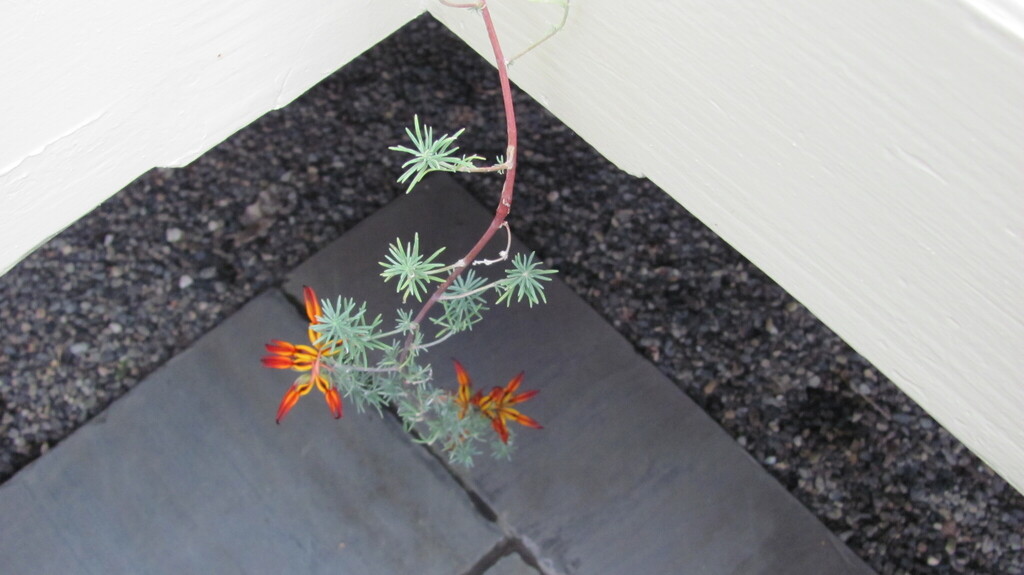
What is this?
Parrot's Beak Lotus berthelotii
A trailing, succulent-leaved legume endemic to the western Canary Islands that occurs in dry rocky crevices and cliff faces; it has distinctive tubular, curved orange to red flowers resembling a parrot’s beak. On Tenerife it appears in sheltered cliffs and eroded walls within and near the park.
Trailing stems with fleshy pinnate leaflets and unmistakable curved tubular orange-red flowers that hang from the stems; flowers are narrow and bird-beak shaped. Look for the succulent, shiny leaflets in crevices and walls.
Common Confusions
- Carpobrotus Carpobrotus edulis Carpobrotus has larger fleshy leaves and daisy-like flowers, whereas Lotus has slender tubular flowers and pinnate leaflets.
- Erodium Erodium spp. Erodium species have papery, distinct petals and different leaf forms; Lotus has succulent leaflets and tubular pea-like flowers.
- Lathyrus Lathyrus spp. Lathyrus (vetchlings) have broader winged stems and different flower shape; Lotus flowers are narrow, tubular and curved.
- Cytisus Cytisus spp. Cytisus is a shrub with typical pea-flowers in clusters; Lotus is trailing with succulent pinnate leaves and solitary tubular flowers.
- Lotus corniculatus Lotus corniculatus L. corniculatus is low and has small papilionaceous flowers in different color ranges; L. berthelotii is more succulent with distinctly curved tube-like flowers.