 Point Pelee National Park Migratory Birds
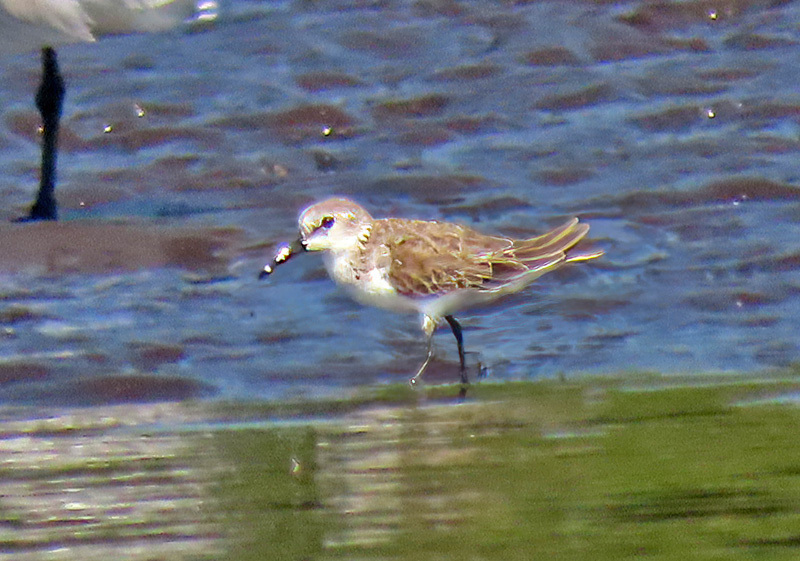
What is this?
Semipalmated Sandpiper Calidris pusilla
A small, compact sandpiper with short legs and a short straight bill that migrates along shorelines and mudflats at Point Pelee. It forms large flocks on exposed mud, feeding on invertebrates and staging during both spring and fall migration.
Look for a compact build, a short straight bill, and dark legs; flocking behavior and mudflat probing are diagnostic. In non-breeding plumage note subtle face pattern and bill proportions.
Common Confusions
- Least Sandpiper Calidris minutilla Least Sandpiper is the smallest with yellowish legs (semipalmated usually has dark legs) and slightly more decurved bill; leg color in good light helps separate them.
- Western Sandpiper Calidris mauri Western Sandpiper can look similar in fall but often shows a slightly longer bill and subtle plumage differences; careful bill proportions and head pattern help.
- Semipalmated Plover Charadrius semipalmatus Semipalmated Plover is a plover with a thicker bill, rounder head and bold breast band, not a sandpiper’s probing bill and feeding posture.
- Pectoral Sandpiper Calidris melanotos Pectoral is larger with a distinct sharp demarcation between streaked breast and white belly and a longer neck profile.
- Sanderling Calidris alba Sanderling is paler and often bounces on exposed sand, showing a stouter bill and no visible streaking in non-breeding plumage; habitat (open surf) and behavior differ.