 Kruger National Park South Africa Mammals
What is this?
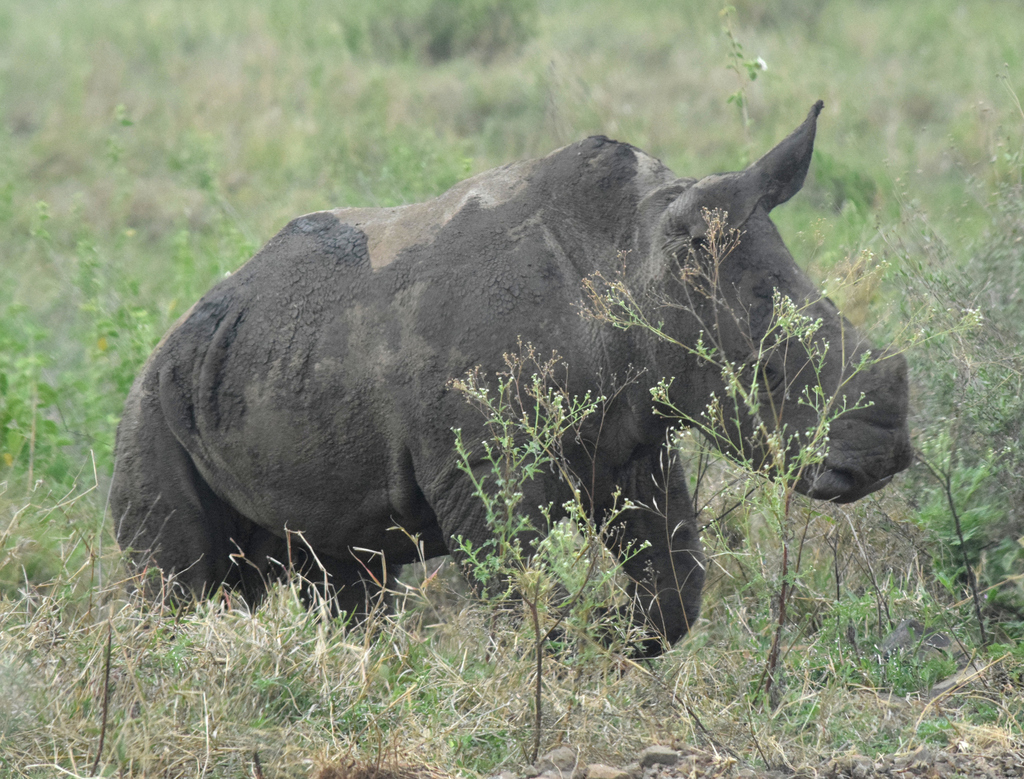
White Rhinoceros Ceratotherium simum
A large, near-grassland specialist with a broad square lip adapted to grazing; white rhino numbers in Kruger are significant and they often form subgroups around open grassy pans. They are generally more tolerant of open plains than the browse-oriented black rhino.
Very large, bulky body with thick grey skin and one or two nasal horns; the white rhino’s square, broad upper lip is adapted for grazing and its head is held low when feeding. Look for grazing activity on short grasses and a characteristic rolling gait.
Common Confusions
- Black Rhinoceros Diceros bicornis Black rhinos have a pointed, prehensile lip for browsing and a different head carriage, while white rhinos have a broad square lip for grazing.
- Hippopotamus Hippopotamus amphibius Hippos are semi-aquatic with barrel-shaped bodies and spend much of the day submerged; rhinos are terrestrial with horns on the snout.
- Large Cape Buffalo Syncerus caffer Buffalo are bovids with paired horns and a different muzzle; rhinos have single or double nasal horns and a heavy, thick-skinned body.
- Fossil or Replica Rhino Dead material or models are stationary and often lack the live posture, mud wallowing and behavior of live rhinos.
- Elephant Calf Loxodonta africana Elephants have trunks and large ears; rhinos lack a trunk and have distinct nasal horns.