 Kakadu National Park Northern Territory Reptiles
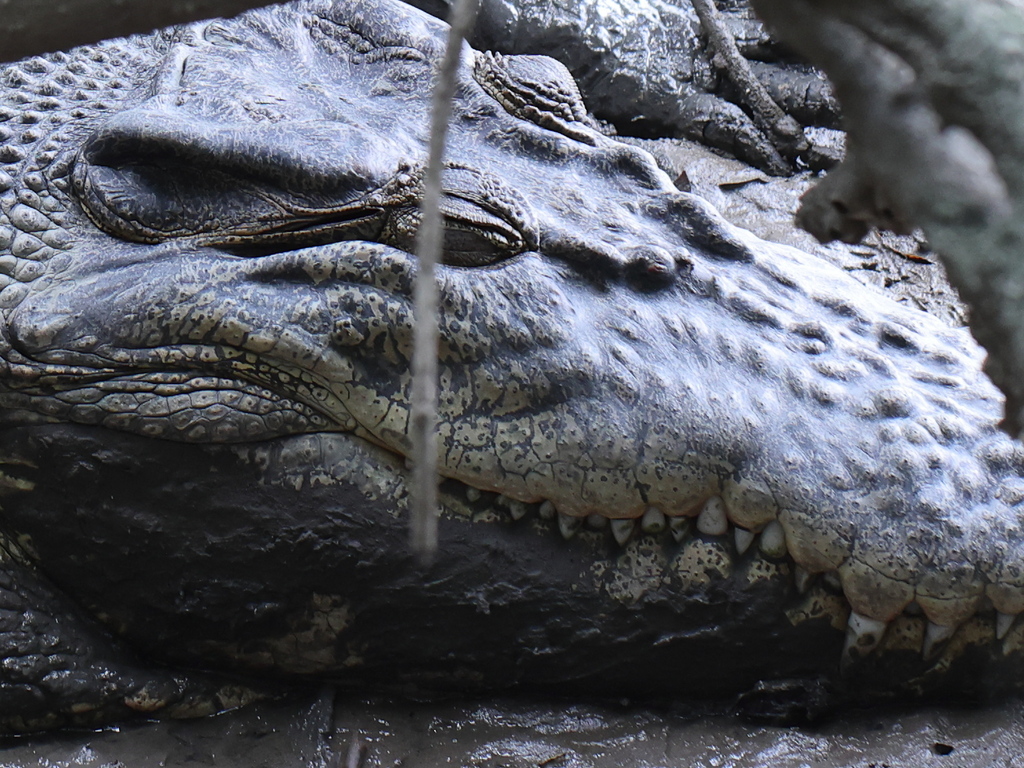
What is this?
Saltwater Crocodile Crocodylus porosus
The apex predator of Kakadu's tidal rivers, estuaries and coastal floodplains, Saltwater Crocodiles grow to very large sizes and defend territories along major waterways. In Kakadu they use billabongs and river bends for ambush hunting and breed in the wet season, leaving large nest mounds close to rising waters.
Look for a broad, heavy head with a robust snout, raised ridged scales (scutes) along the back, and eyes/nasal openings set high for stealth in water. Adults often sit partially submerged with only the eyes and snout visible; note large size (often several metres) and territorial displays such as throat puffing and tail slaps.
Common Confusions
- Freshwater Crocodile Crocodylus johnsoni Freshwater crocs are much smaller with a more slender, pointed snout and generally skinnier profile compared with the broad, robust head of a saltwater crocodile.
- Mertens' Water Monitor Varanus mertensi Monitors have visible limbs and a long neck and tail that lift off the substrate; crocodiles are heavily armored, low-slung and lack the agile gait of monitors.
- Basking Log or Driftwood Logs are stationary and lack eyes and nostrils above the waterline; crocodiles show subtle breathing movement, eyes, and can disappear quickly into water.
- Large Floodplain Rock Rocks do not flick their tails or reposition; crocodiles often angle their bodies and show scute patterning and occasional mouth opening.
- Juvenile Saltwater Crocodile Crocodylus porosus Juveniles of the same species are obviously smaller but still have the same robust head proportions; size plus context (small animal vs adult) helps separate age classes rather than species.