 Coastal Plants of Cinque Terre, Italy
What is this?
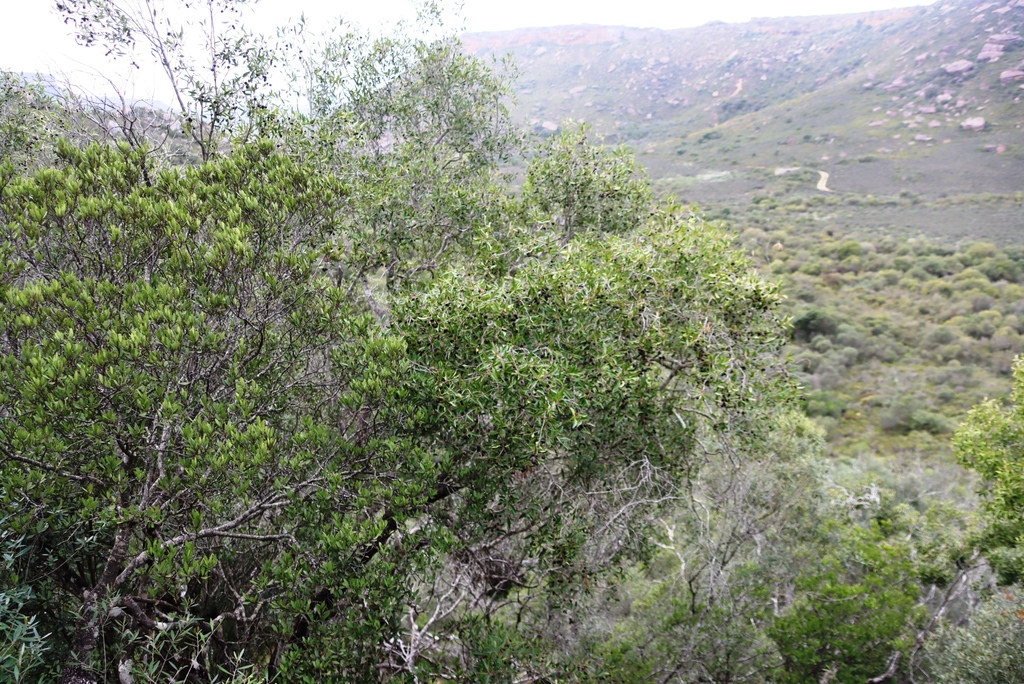
Olive Olea europaea
Anciently cultivated small tree with silvery‑green, lanceolate leaves and gnarled trunks on terraced slopes. Olives dominate the human‑shaped agricultural landscape of Cinque Terre, where old trees stabilize terraces and provide cultural and ecological continuity.
Look for alternate, lanceolate silvery‑green leaves, small clustered white fragrant flowers in spring, and the familiar rounded drupes (olives) on gnarled trunks often grown on terraces.
Common Confusions
- Mock Olive Phillyrea latifolia Phillyrea has opposite thicker leaves and different fruit (small drupes) but lacks olives’ characteristic gnarled trunk and larger fruit clusters.
- Wild Privet Ligustrum vulgare Privet has opposite glossy leaves and panicles of small white flowers, not the alternate silvery leaves and solitary small white olive flowers.
- Elaeagnus Elaeagnus angustifolia Elaeagnus leaves are silvery on the underside and its fruits and flowers differ; trunk and leaf arrangement help separate it from olive.
- Oleaster Elaeagnus spp. Oleaster often has more conspicuous silvery scales on leaves and different fruit; olives show characteristic leathery leaves and typical fruit clusters.
- Young Pistacia Pistacia terebinthus Pistacia has pinnate leaves, unlike the simple lanceolate leaves of Olea.