 Bavarian Forest National Park Germany Mammals
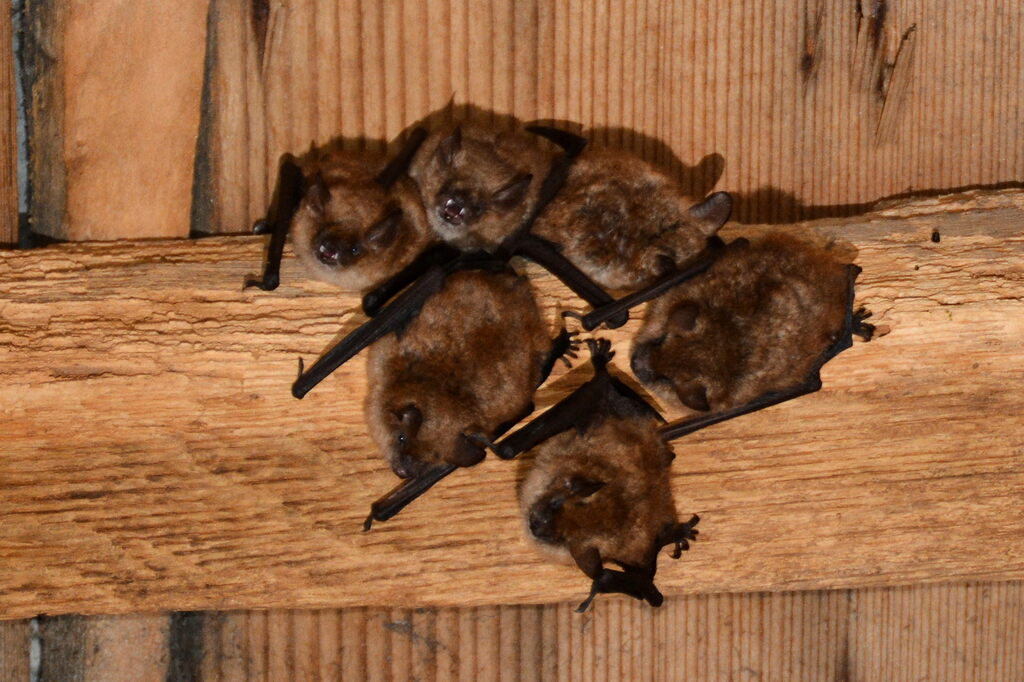
What is this?
Greater Mouse-eared Bat Myotis myotis
A relatively large forest bat that roosts in caves, old buildings and tree cavities and hunts larger ground-dwelling insects using short, direct flights. In Bavarian Forest it uses cave systems, old stone structures and mature trees for maternity colonies.
Large Myotis with a robust body, rounded ears (not extremely long), and slow, straight flight low over the ground; roosts in caves and attics—look for clustered colonies and watch flight pattern and foraging height at dusk.
Common Confusions
- Lesser Mouse-eared Bat Myotis blythii Very similar in appearance but slightly smaller and with different skull/ear proportions; in the field, roost site and echolocation differences are subtle.
- Common Pipistrelle Pipistrellus pipistrellus Pipistrelles are much smaller with faster, fluttering flight; Myotis myotis is larger with slower, more direct flight and different roosting habits.
- Nathusius' Pipistrelle Pipistrellus nathusii Also smaller and more agile in flight; Myotis myotis is larger and tends to forage lower and more directly over the ground.
- Brown Long-eared Bat Plecotus auritus Long-eared bats have very large ears held forward when flying; greater mouse-eared has shorter ears and a chunkier body.
- Brandt's Bat Myotis brandtii Similar Myotis genus lookalike but smaller; subtle size and ear shape differences separate them.