 Doñana National Park | Spain | Waterfowl
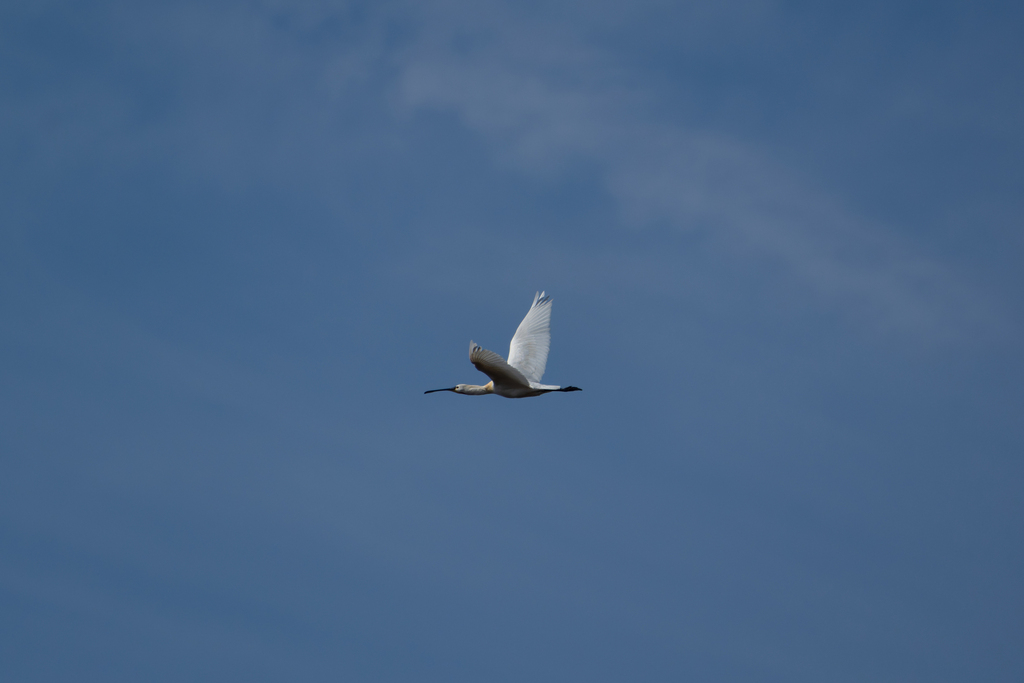
What is this?
Eurasian Spoonbill Platalea leucorodia
Elegant white wader with a long, spatulate bill used to sweep for small fish and invertebrates in shallow water; in Doñana it feeds along lagoon margins and tidal flats. Breeding birds have a short crest and yellowish breast patch in spring, and they nest in mixed colonies with herons and ibises.
White plumage, long neck, and unmistakable flattened spoon‑shaped bill; in breeding season look for a short peak‑like crest and yellow feathering on the breast. Watch feeding: side‑to‑side sweeping is diagnostic and different from probing herons or filter‑feeding flamingos.
Common Confusions
- Greater Flamingo Phoenicopterus roseus Flamingos are pink with long, thin, curved bills and feed by filtering, whereas spoonbills are white with a flat, spoon‑shaped bill used in sweeping motions.
- Black‑headed Gull Chroicocephalus ridibundus Gulls are smaller, have pointed bills and different flight silhouette; spoonbills are larger with a long neck and distinctive spatulate bill.
- White Heron Egretta garzetta Herons have pointed bills and hunt by stabbing or stalking, lacking the spoonbill’s flattened bill and sweeping feeding behavior.
- Wood Stork Not present here, but similar bulk—wood storks have thicker, straight bills and darker legs and head; spoonbills have a smooth white plumage and spoon bill.
- American White Ibis Ibis have curved bills (not spatulate) and different foraging posture; spoonbills sweep a wide arc with the bill’s tip flattened.